Creme Brulee Cheesecake: A Decadent Twist on Two Classic Desserts
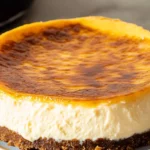
Craving the rich creaminess of cheesecake and the crispy perfection of crème brûlée? Now you don’t have to choose! Creme Brulee Cheesecake combines a smooth, velvety cheesecake with a caramelized sugar top that cracks like your favorite crème brûlée. Perfect for any celebration or a sweet treat, this easy-to-follow recipe lets you indulge in two timeless desserts at once. Let’s get started!
- Prep Time: 20 minutes
- Cook Time: 1 hour 5 minutes
- Total Time: 9 hours 25 minutes (including chilling time)
- Yield: 12 slices 1x
- Category: Dessert
- Method: Baking, Chilling
- Cuisine: American, French
- Diet: Vegetarian
Ingredients
Graham Cracker Crust:
The graham cracker crust is the perfect base for this cheesecake, providing a crunchy texture that balances the rich and creamy filling. Here’s what you’ll need:
- 2 cups of crushed graham crackers (about 9–10 sheets)
- 6 tablespoons (85 g) unsalted butter, melted
- 2 tablespoons (25 g) granulated sugar
Substitution Tip:
If you don’t have graham crackers on hand, you can substitute with digestive biscuits or even cookies like Oreo or biscotti for a different twist. Simply crush them the same way you would graham crackers.
Creme Brulee Cheesecake Filling:
The centerpiece of this dessert is the creamy vanilla filling. It’s rich, smooth, and lightly tangy—everything a cheesecake should be. The following ingredients are necessary:
- 4 blocks (8 oz. each) cream cheese, at room temperature
- 1 cup (200 g) granulated sugar
- ¾ cup (180 g) sour cream, at room temperature
- ¼ cup (59 ml) heavy cream, at room temperature
- 1 tablespoon (15 ml) vanilla bean paste
- ¼ teaspoon salt
- 3 large eggs, at room temperature
- 1 large egg yolk, at room temperature
- 2–3 tablespoons (25–38 g) granulated sugar for topping
Substitution Tip:
If you don’t have vanilla bean paste, you can substitute it with pure vanilla extract. The flavor will be slightly different, but it will still work wonderfully in this recipe.
Instructions
Step 1: Preparing the Graham Cracker Crust
Preheat your oven to 350°F (177°C). Start by making the graham cracker crust. Using a food processor or a ziplock bag with a rolling pin, crush the graham crackers into fine crumbs. Once you have the crumbs, transfer them to a mixing bowl and add the melted butter and sugar. Stir the mixture until it has a consistency similar to wet sand.
Next, press the graham cracker mixture into the bottom of your springform pan. Use the back of a spoon or your fingers to firmly press the crumbs into an even layer. Bake this crust in the preheated oven for 10 minutes, then remove it from the oven and allow it to cool on a wire rack. This gives the crust time to set before you add the cheesecake filling.
Step 2: Preparing the Cheesecake Filling
Now, it’s time to make the creamy cheesecake filling. Start by beating the cream cheese in a stand mixer (or with an electric hand mixer) on low speed until it’s completely smooth. Add the granulated sugar and continue to beat on low speed until it’s fully combined and the mixture looks glossy. Scrape down the sides of the bowl to ensure even mixing.
Next, add the sour cream, heavy cream, vanilla bean paste, and salt. Mix until smooth and well incorporated. At this point, the filling should be creamy and free of lumps.
Step 3: Adding the Eggs
Now it’s time to add the eggs. Add the eggs and egg yolk one at a time, mixing at the lowest speed after each addition. Be careful not to overmix, as this can lead to air bubbles in the cheesecake. Once the eggs are fully incorporated, pour the cheesecake filling over the cooled graham cracker crust.
Step 4: Setting Up the Water Bath
To prevent cracks from forming in the cheesecake, we’re going to use a water bath. Place the springform pan inside a 10-inch cake pan. This will serve as a protective layer against the water. Now, carefully place the cake pan inside a larger roasting pan. Fill the roasting pan with very hot water until it comes halfway up the sides of the springform pan. This gentle steam will help the cheesecake bake evenly, resulting in a smooth, crack-free surface.
Step 5: Baking the Cheesecake
Place the cheesecake in the preheated oven and bake it at 325°F (163°C) for 65-75 minutes. You’ll know the cheesecake is done when the edges are set, but the center still has a slight jiggle, like gelatin. If it’s too wobbly, continue baking for a few more minutes until it firms up.
After the cheesecake is done baking, turn off the oven and crack the oven door. Let the cheesecake sit inside the oven for 1 hour to cool gradually. This cooling process helps prevent cracks from forming in the top of the cheesecake.
Step 6: Cooling and Chilling
After the cheesecake has cooled for 1 hour in the oven, remove it from the oven and the water bath. Place the springform pan on a cooling rack and let the cheesecake cool at room temperature for another hour. Once it has cooled, run a butter knife along the edges of the cheesecake to loosen it from the pan. Cover the cheesecake with plastic wrap and place it in the refrigerator to chill for at least 8 hours or overnight.
Step 7: Caramelizing the Sugar
When you’re ready to serve the cheesecake, take it out of the fridge. Sprinkle a thin, even layer of granulated sugar (superfine sugar works best) over the surface of the cheesecake. Then, using a culinary torch, carefully caramelize the sugar. Move the torch in a slow, sweeping motion across the surface of the cheesecake to evenly melt and brown the sugar. The result will be a beautiful golden, crispy crust on top.
If the cheesecake has softened slightly during the caramelizing process, return it to the fridge for 15-20 minutes to allow the topping to set. Once the caramelized sugar has firmed up, slice the cheesecake and serve it with fresh fruit or other garnishes of your choice.
Notes
- Room Temperature Ingredients: For the smoothest cheesecake filling, make sure all your ingredients are at room temperature. Cold cream cheese or eggs can cause lumps in the batter, which can be tricky to smooth out once mixed.
- Water Bath: The water bath is essential for a smooth, crack-free cheesecake. Make sure the water doesn’t come into direct contact with the cheesecake. If you’re worried about leaks in the springform pan, wrap the outside of the pan with heavy-duty aluminum foil to prevent water from seeping in.
- Avoid Overmixing: When adding the eggs to the cheesecake filling, mix just until incorporated. Overmixing can cause the batter to become too airy, leading to cracks during baking.
- Caramelizing the Sugar: If you don’t have a culinary torch, you can achieve a similar result by broiling the sugar under a low broiler for a few minutes. Just keep a close eye on it to avoid burning the sugar.