
Imagine a leisurely weekend morning, sunlight streaming through your kitchen window, the tantalizing aroma of sizzling steak and perfectly roasted potatoes filling the air. A vibrant, hearty hash, brimming with tender steak, crispy potatoes, and flawlessly cooked eggs, awaits. This isn’t just any ordinary breakfast; it’s a Steak and Egg Potato Hash, a dish that’s both satisfyingly delicious and surprisingly simple to prepare. I can still recall the first time I ventured into making this hash. I was hosting a brunch gathering for a group of friends, and I wanted to create a dish that would not only impress them with its flavor and presentation but also be manageable for me to execute without spending the entire morning in the kitchen. This hash proved to be the perfect solution! The recipe was straightforward and easy to follow, the steak turned out perfectly cooked, and everyone raved about the fresh and vibrant herb sauce. It was a resounding success, and it quickly became a staple in my brunch repertoire.
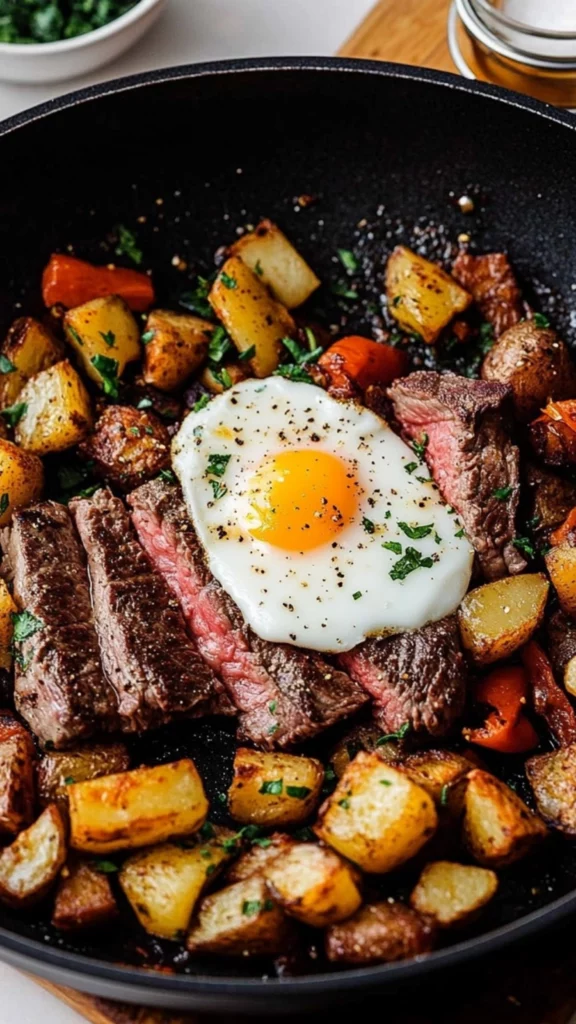
Steak and Egg Potato Hash: A Brunch of Champions

Looking for a delicious and impressive brunch that’s also easy to make? This Steak and Egg Potato Hash is the perfect answer! Tender steak, crispy potatoes, and perfectly cooked eggs, all topped with a fresh herb sauce – it’s a flavor explosion in every bite.
- Prep Time: 10 minutes
- Cook Time: 20 minutes
- Total Time: 30 minutes
- Yield: 4 servings 1x
- Category: Breakfast, Brunch, Main Course
- Method: Sautéing, Frying
- Cuisine: American
Ingredients
- 1 lb top sirloin steak
- Salt and pepper
- Avocado or coconut oil
- 1 lb gold potatoes, diced
- 1 red bell pepper, diced
- ½ yellow onion, diced
- ½ tsp smoked paprika
- ½ tsp garlic powder
- ½ tsp kosher salt
- ¼ tsp black pepper
- 4 eggs
For the Sauce:
- ¼ cup avocado or olive oil
- ¼ cup fresh parsley, chopped
- 2 cloves garlic, minced
- 2 tbsp red wine vinegar
- ½ tsp salt
- ¼ tsp black pepper
Instructions
Prepare the Herb Sauce:
-
- Combine Ingredients: In a jar with a tight-fitting lid or a medium-sized bowl, combine the avocado oil (or olive oil), chopped fresh parsley, minced garlic, red wine vinegar, salt, and black pepper.
- Mix Well: If using a jar, shake it vigorously until the ingredients are thoroughly combined and emulsified. If using a bowl, whisk the ingredients together until they are well blended. Set the sauce aside. Beginner Note: The herb sauce can be made ahead of time and stored in the refrigerator for up to 2 days. The flavors will actually meld together and intensify over time.
Cook the Steak:
-
- Season the Steak: Pat the steak dry with paper towels. This crucial step helps the steak sear beautifully and prevents it from steaming. Season both sides of the steak generously with salt and pepper. Don’t be shy with the seasoning! Beginner Note: Using kosher salt is recommended because its larger crystals distribute more evenly than table salt. Allow the steak to sit at room temperature for about 30 minutes before cooking. This will help it cook more evenly.
- Heat the Oil: Heat avocado oil or coconut oil in a cast iron skillet or a large skillet with a heavy bottom over medium-high heat. The skillet needs to be very hot before adding the steak to ensure a good sear. Beginner Note: A hot skillet is absolutely essential for developing a beautiful brown crust on the steak. You’ll know the oil is hot enough when it shimmers and a drop of water flicked into the pan sizzles immediately.
- Sear the Steak: Once the oil is hot, carefully place the steak in the pan. Resist the urge to move it around too much; let it cook undisturbed for 4-5 minutes per side, or until a rich, brown, crispy crust develops on the outside. Beginner Note: A good sear is the key to a flavorful steak. Don’t overcrowd the pan; if necessary, cook the steaks in batches.
- Check the Temperature: Flip the steak over and cook for another 4-5 minutes, or until the internal temperature reaches 130-135°F for medium-rare. This allows for 10-15 degrees of carry-over cooking while the steak rests, bringing it to a final temperature of 145°F (medium-rare). Beginner Note: Using a reliable meat thermometer is the best way to ensure your steak is cooked to your desired doneness. Don’t rely on guesswork!
- Rest the Steak: Transfer the cooked steak to a cutting board and let it rest for at least 5 minutes, and preferably 10 minutes, before slicing. This resting period allows the juices to redistribute throughout the steak, resulting in a more tender and flavorful final product. Beginner Note: Resting the steak is absolutely crucial! Don’t skip this step.
Cook the Hash:
-
- Prepare the Pan: If the bottom of the skillet has any burnt bits from searing the steak, quickly wipe it clean with a paper towel. Add another tablespoon of oil to the pan over medium-high heat.
- Add Vegetables: Add the diced onions, bell peppers, and potatoes to the skillet. Sprinkle the vegetables with smoked paprika, garlic powder, kosher salt, and black pepper. Stir well to combine, ensuring that all the vegetables are coated with the spices. Beginner Note: Dicing the vegetables into small, uniform pieces is essential for even cooking. The smaller the pieces, the faster they will cook.
- Cook the Hash: Cook the vegetables, stirring occasionally, until the peppers and onions are softened and the potatoes are crispy and fork-tender, about 8-10 minutes. Beginner Note: The cooking time will depend on the size of your diced potatoes and the heat of your skillet. Keep an eye on the vegetables and adjust the cooking time as needed. You want the potatoes to be crispy on the outside and tender on the inside.
Combine and Finish:
-
- Add Steak: Reduce the heat to medium-low. Cut the rested steak into bite-sized cubes. Add the cubed steak to the hash and stir gently to combine. Beginner Note: Adding the steak at the end of the cooking process prevents it from overcooking and becoming tough.
- Add Eggs: Crack the eggs carefully directly onto the hash, spacing them evenly. Cover the skillet with a lid and cook until the egg whites are set and the yolks are runny (about 4-6 minutes for runny yolks). If you prefer your eggs over hard, cook them a bit longer. Beginner Note: Using a lid helps the eggs cook evenly and prevents the tops from becoming too dry.
- Drizzle with Sauce: Drizzle the prepared herb sauce generously over the hash, or allow guests to pour their own sauce on top of each serving separately. The vibrant herb sauce adds a fresh and flavorful finishing touch to the dish.
Notes
- Pat steak dry for a good sear.
- Use a meat thermometer for steak doneness.
- Dice potatoes evenly.
This recipe is an absolute dream for beginner cooks. It breaks down the cooking process into manageable, numbered steps, making it easy to follow even for those with limited culinary experience. It’s also a relatively quick and healthy meal, packed with protein from the steak and eggs, complex carbohydrates from the potatoes, and healthy fats from the avocado oil and eggs. If you’re looking for a delicious and impressive brunch recipe that’s also easy to make and relatively healthy, this Steak and Egg Potato Hash is the answer you’ve been searching for. It’s a fantastic way to kickstart your day or impress your guests with your culinary prowess.
Ingredients and Preparation: The Foundation of Brunch Bliss
This recipe utilizes fresh, readily available ingredients, making it a breeze for even novice cooks to assemble.
For the Herb Sauce:
- ¼ cup avocado oil (or olive oil) – Alternative: Any neutral-flavored oil with a high smoke point, such as grapeseed oil, canola oil, or even refined coconut oil, will work. Avoid using extra virgin olive oil for searing as it has a lower smoke point.
- ¼ cup fresh parsley, chopped – Alternative: Fresh cilantro, chives, tarragon, or a combination of your favorite herbs would be equally delicious. If you only have dried herbs on hand, use about half the amount, as dried herbs are more potent.
- 2 cloves garlic, minced – Alternative: 1 teaspoon garlic powder. Freshly minced garlic provides a more intense and aromatic flavor, but garlic powder is a convenient substitute when you’re short on time.
- 2 tablespoons red wine vinegar – Alternative: Apple cider vinegar, white wine vinegar, or even balsamic vinegar for a slightly sweeter and more complex flavor.
- ½ teaspoon salt (I recommend kosher salt for its even distribution of flavor)
- ¼ teaspoon black pepper (freshly ground black pepper is always best)
For the Steak:
- 1 lb top sirloin steak (Note 1: Top sirloin is a lean and flavorful cut of beef that’s ideal for this recipe. It’s also relatively budget-friendly.) – Alternative: Ribeye steak, New York strip steak, or even flank steak would be excellent choices. Adjust cooking times based on the thickness of the steak and your desired level of doneness.
- Salt and pepper to taste (use a generous amount to enhance the steak’s flavor)
- Avocado oil or coconut oil to cook (Note 2: These oils have high smoke points, making them ideal for searing the steak at high heat.) – Alternative: Grapeseed oil, canola oil, or any other high-heat oil suitable for searing.
For the Hash:
- 1 lb gold potatoes, diced small (about ½-inch cubes) – Alternative: Red potatoes, Yukon Gold potatoes, or even sweet potatoes for a slightly sweeter and more colorful hash. Dicing the potatoes into small, uniform pieces is essential for ensuring even cooking and a crispy texture.
- 1 red bell pepper, diced small – Alternative: Any color bell pepper (yellow, orange, or green), or a combination of different colored peppers for visual appeal and a variety of flavors.
- ½ medium yellow onion, diced small – Alternative: White onion or red onion. Red onion will add a slightly sharper flavor.
- ½ teaspoon smoked paprika – Alternative: Regular paprika, sweet paprika, or a pinch of cayenne pepper for a touch of heat. Smoked paprika adds a wonderful depth of flavor to the hash.
- ½ teaspoon garlic powder
- ½ teaspoon kosher salt
- ¼ teaspoon black pepper
- 4 large eggs
Step-by-Step Instructions: Crafting Culinary Harmony
These easy-to-follow instructions will guide you through each step of creating your delicious Steak and Egg Potato Hash:
Prepare the Herb Sauce:
- Combine Ingredients: In a jar with a tight-fitting lid or a medium-sized bowl, combine the avocado oil (or olive oil), chopped fresh parsley, minced garlic, red wine vinegar, salt, and black pepper.
- Mix Well: If using a jar, shake it vigorously until the ingredients are thoroughly combined and emulsified. If using a bowl, whisk the ingredients together until they are well blended. Set the sauce aside. Beginner Note: The herb sauce can be made ahead of time and stored in the refrigerator for up to 2 days. The flavors will actually meld together and intensify over time.
Cook the Steak:
- Season the Steak: Pat the steak dry with paper towels. This crucial step helps the steak sear beautifully and prevents it from steaming. Season both sides of the steak generously with salt and pepper. Don’t be shy with the seasoning! Beginner Note: Using kosher salt is recommended because its larger crystals distribute more evenly than table salt. Allow the steak to sit at room temperature for about 30 minutes before cooking. This will help it cook more evenly.
- Heat the Oil: Heat avocado oil or coconut oil in a cast iron skillet or a large skillet with a heavy bottom over medium-high heat. The skillet needs to be very hot before adding the steak to ensure a good sear. Beginner Note: A hot skillet is absolutely essential for developing a beautiful brown crust on the steak. You’ll know the oil is hot enough when it shimmers and a drop of water flicked into the pan sizzles immediately.
- Sear the Steak: Once the oil is hot, carefully place the steak in the pan. Resist the urge to move it around too much; let it cook undisturbed for 4-5 minutes per side, or until a rich, brown, crispy crust develops on the outside. Beginner Note: A good sear is the key to a flavorful steak. Don’t overcrowd the pan; if necessary, cook the steaks in batches.
- Check the Temperature: Flip the steak over and cook for another 4-5 minutes, or until the internal temperature reaches 130-135°F for medium-rare. This allows for 10-15 degrees of carry-over cooking while the steak rests, bringing it to a final temperature of 145°F (medium-rare). Beginner Note: Using a reliable meat thermometer is the best way to ensure your steak is cooked to your desired doneness. Don’t rely on guesswork!
- Rest the Steak: Transfer the cooked steak to a cutting board and let it rest for at least 5 minutes, and preferably 10 minutes, before slicing. This resting period allows the juices to redistribute throughout the steak, resulting in a more tender and flavorful final product. Beginner Note: Resting the steak is absolutely crucial! Don’t skip this step.
Cook the Hash:
- Prepare the Pan: If the bottom of the skillet has any burnt bits from searing the steak, quickly wipe it clean with a paper towel. Add another tablespoon of oil to the pan over medium-high heat.
- Add Vegetables: Add the diced onions, bell peppers, and potatoes to the skillet. Sprinkle the vegetables with smoked paprika, garlic powder, kosher salt, and black pepper. Stir well to combine, ensuring that all the vegetables are coated with the spices. Beginner Note: Dicing the vegetables into small, uniform pieces is essential for even cooking. The smaller the pieces, the faster they will cook.
- Cook the Hash: Cook the vegetables, stirring occasionally, until the peppers and onions are softened and the potatoes are crispy and fork-tender, about 8-10 minutes. Beginner Note: The cooking time will depend on the size of your diced potatoes and the heat of your skillet. Keep an eye on the vegetables and adjust the cooking time as needed. You want the potatoes to be crispy on the outside and tender on the inside.
Combine and Finish:
- Add Steak: Reduce the heat to medium-low. Cut the rested steak into bite-sized cubes. Add the cubed steak to the hash and stir gently to combine. Beginner Note: Adding the steak at the end of the cooking process prevents it from overcooking and becoming tough.
- Add Eggs: Crack the eggs carefully directly onto the hash, spacing them evenly. Cover the skillet with a lid and cook until the egg whites are set and the yolks are runny (about 4-6 minutes for runny yolks). If you prefer your eggs over hard, cook them a bit longer. Beginner Note: Using a lid helps the eggs cook evenly and prevents the tops from becoming too dry.
- Drizzle with Sauce: Drizzle the prepared herb sauce generously over the hash, or allow guests to pour their own sauce on top of each serving separately. The vibrant herb sauce adds a fresh and flavorful finishing touch to the dish.
Beginner Tips and Notes: Your Kitchen Companion
Even the simplest recipes can benefit from a few helpful tips and tricks:
- Patting the Steak Dry: Patting the steak dry with paper towels before searing is absolutely crucial for achieving a beautiful brown crust. Moisture on the surface of the steak will cause it to steam instead of sear, resulting in a less flavorful and less appealing steak.
- Hot Skillet: A hot skillet is essential for searing the steak properly. If the skillet isn’t hot enough, the steak will steam instead of sear, and you won’t get that delicious crispy crust. Preheat the skillet thoroughly before adding the oil and the steak.
- Meat Thermometer: Investing in a reliable meat thermometer is a game-changer when it comes to cooking steak to your desired doneness. Don’t rely on guesswork! A meat thermometer will take the guesswork out of the equation and ensure that your steak is cooked perfectly every time.
- Resting the Steak: Resting the steak after cooking is absolutely vital for tender and juicy results. Don’t skip this step! Resting allows the juices to redistribute throughout the steak, preventing them from running out when you slice it.
- Dicing Vegetables: Dicing the vegetables into small, uniform pieces is crucial for even cooking. If the vegetables are different sizes, some will cook faster than others, leading to an unevenly cooked hash.
- Adjusting Cooking Times: Cooking times may vary slightly depending on the size of your diced potatoes, the thickness of your steak, and the heat of your skillet. Keep an eye on the food and adjust the cooking times as needed. Use your best judgment and don’t be afraid to test the doneness of the potatoes and the steak.
- Flavor Adjustments: Don’t be afraid to experiment with the seasonings and adjust them to your liking. If you like a spicier hash, add a pinch of cayenne pepper or a drizzle of hot sauce. If you prefer a more savory flavor, add a dash of Worcestershire sauce to the hash.
- Egg Doneness: The cooking time for the eggs will depend on how runny you like your yolks. Keep an eye on the eggs and adjust the cooking time accordingly. If you prefer your eggs over hard, cook them a bit longer.
Serving Suggestions: Completing the Brunch Experience
This Steak and Egg Potato Hash is a complete and satisfying meal on its own, but you can definitely enhance the brunch experience with some complementary sides and drinks.
- Sides: Serve the hash with a side of toasted bread (sourdough or multigrain would be excellent), sliced avocado, a fresh green salad with a light vinaigrette, or a side of fruit.
- Drinks: Pair the hash with a cup of freshly brewed coffee, tea, or a refreshing mimosa for a festive brunch.
- Leftovers: Store leftover hash in an airtight container in the refrigerator for up to 3 days. Reheat the hash in a skillet or microwave. The potatoes may not be as crispy the second day, but the hash will still be delicious.
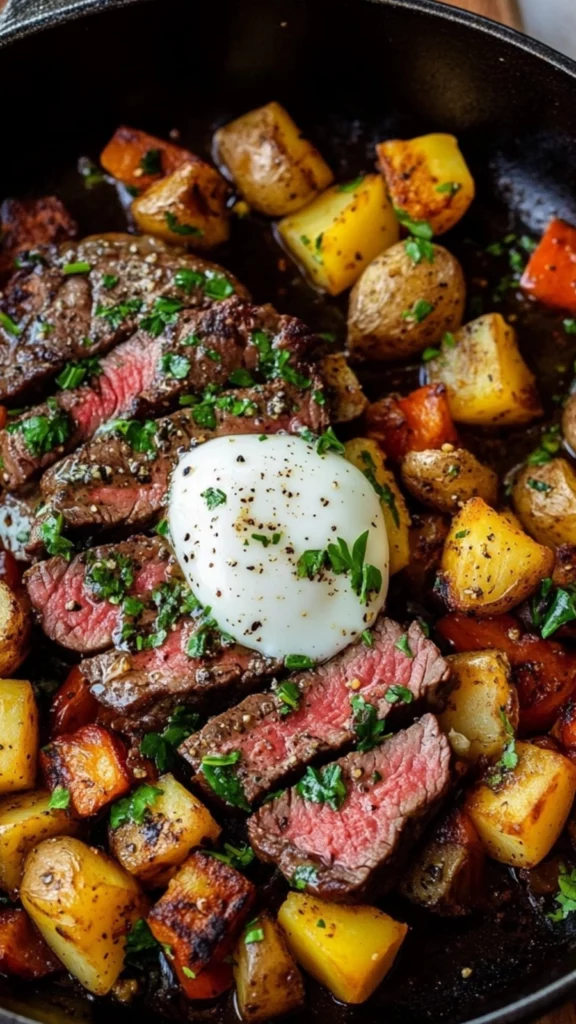
Conclusion: A Brunch to Remember
This Steak and Egg Potato Hash is a truly delicious and impressive brunch recipe that’s also surprisingly easy to make. It’s a fantastic way to start your day on a high note or impress your guests with your culinary skills. I wholeheartedly encourage you to try this recipe and make it your own. Don’t be afraid to experiment with different herbs in the sauce, add other vegetables to the hash, or adjust the seasonings to your liking. Perhaps you’ll discover a new favorite combination that you’ll want to share with friends and family. Most importantly, have fun and enjoy the process of creating something delicious! Share your culinary creations and experiences in the comments below – I’d be absolutely thrilled to see your unique variations of this delightful dish!
This easy and versatile recipe is a perfect example of how simple ingredients, when combined with a little creativity and attention to detail, can be transformed into a truly memorable meal. It’s a celebration of fresh flavors, a testament to the power of a good sear, and a reminder that brunch doesn’t have to be complicated to be delicious. So, gather your ingredients, put on your apron, and get ready to create a brunch that your friends and family will be talking about for days to come. This Steak and Egg Potato Hash is waiting to be discovered, and it’s sure to become a new favorite in your kitchen. Enjoy!