The Ultimate Beginner’s Guide to Making Perfect French Macarons
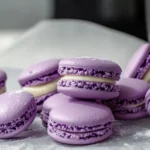
French macarons are the epitome of elegance and sophistication, yet they can be surprisingly simple to make with the right guidance. I remember my first attempt at macarons—it was a bit messy, but the end result was so rewarding! These little cookies have a delicate crisp exterior and a soft, chewy interior that makes them irresistible. Whether you’re a beginner or a seasoned baker, this step-by-step guide will help you master the art of making perfect macarons. With a bit of patience and practice, you’ll be creating these delightful treats in your own kitchen. Let’s dive in!
- Prep Time: 30 minutes
- Cook Time: 15 minutes
- Total Time: 45 minutes
- Yield: 20 sandwiched macarons 1x
- Category: Dessert
- Method: Baking
- Cuisine: French
- Diet: Vegetarian
Ingredients
For the Macaron Shells:
- 150 grams sifted super-fine almond flour (measure after sifting)
- 180 grams powdered sugar
- ¼ teaspoon salt
- 120 grams large egg whites (at room temperature, about 4 large eggs)
- 60 grams granulated sugar
- 4 drops liquid-gel food coloring (optional, for color)
- 1 teaspoon pure vanilla extract
For the Vanilla Buttercream Filling:
- 1 cup unsalted butter, softened
- 3 cups powdered sugar
- 1 teaspoon vanilla extract
- 2 tablespoons heavy cream (optional for consistency)
Instructions
1. Prepare Your Piping Bag and Baking Sheets
Preheat your oven to 315°F (157°C). Line three large baking sheets with parchment paper, and set aside. This will ensure your macarons don’t stick during baking. For the piping bag, cut the tip off a large piping bag and fit it with a large plain tip. This will help you pipe out the perfect circles for your macaron shells.
2. Sift Dry Ingredients
Sift 150 grams of almond flour and 180 grams of powdered sugar together into a medium bowl. It’s crucial to sift the almond flour to ensure a smooth macaron batter. This step eliminates any lumps and prevents gritty shells. After sifting, discard any large pieces of almond flour that don’t make it through the sifter.
3. Prepare the Meringue
In a clean, dry glass or metal bowl, beat the egg whites with an electric mixer at medium-high speed for about 30 seconds. Add ¼ teaspoon salt, then slowly begin adding the 60 grams of granulated sugar, a little bit at a time, while continuing to beat the mixture. It’s important to add the sugar slowly, about ½ teaspoon per addition, to ensure the sugar dissolves fully into the egg whites.
Once all the sugar is added, continue beating the meringue until stiff peaks form. To test, dip your whisk into the mixture, then invert it. The meringue should hold its shape and not curl over.
4. Add Color and Flavor
Once the meringue is at stiff peaks, add the food coloring and vanilla extract. Mix gently until the color is fully incorporated. You can add more or less food coloring depending on the desired intensity of the color.
5. Combine Dry Ingredients with Meringue
Carefully fold the sifted almond flour and powdered sugar mixture into the meringue in three additions. Use a spatula to fold the ingredients together, being mindful not to deflate the meringue too much. The goal is to achieve a smooth, shiny batter that falls off the spatula in thick ribbons.
6. Macaronage: Achieve the Perfect Consistency
Now comes the most crucial step: macaronage, the technique of folding the batter to the right consistency. Continue folding the batter until it reaches a lava-like consistency, meaning it should flow off the spatula in thick ribbons but still maintain structure. If you draw a figure 8 with the batter, it should not break, and it should slowly sink back into the rest of the batter.
If you overmix the batter, your macarons could spread too much or not form the desired texture, so be careful. If the batter seems too thick, mix it a bit more, but err on the side of slightly undermixed to avoid this.
7. Pipe the Macaron Shells
Transfer the macaron batter into the prepared piping bag. Hold the piping bag perpendicular to your lined baking sheets and pipe circles about 1 inch in diameter, leaving about 1 inch of space between each one. You can use a macaron template as a guide if you want perfectly uniform shells.
8. Rest the Macarons
After piping the macarons, gently tap the baking sheet on the counter several times to release any air bubbles and flatten the tops. Let the macaron shells rest for 30 to 60 minutes at room temperature, or until a skin forms on top. To test, lightly touch the top of a macaron; if it doesn’t stick to your finger, it’s ready to bake.
9. Bake the Macarons
Bake the macaron shells in the center of the preheated oven for 12 to 15 minutes, one sheet at a time. To check if they’re done, gently press on one macaron shell; it should not wiggle, and the shell should have formed feet along the bottom.
Allow the macarons to cool completely on the baking sheet before carefully removing them with a spatula.
10. Assemble the Macarons
Pair up similarly sized macaron shells. Pipe your desired filling (vanilla buttercream is a classic choice) on the bottom of one shell and sandwich it with another. Gently press down to secure the filling.
Notes
- Don’t Overmix the Batter: It’s better to err on the side of slightly undermixing your batter than to overmix it. Overmixed batter will result in flat, cracked macarons.
- Room Temperature Eggs: Make sure your egg whites are at room temperature before whipping them. Cold eggs won’t whip up to the desired consistency.
- Resting Time: Allow your macarons to rest long enough to form a skin before baking. This step is crucial for getting that perfect macaron texture.
- Don’t Rush the Cooling Process: Allow your macarons to cool completely on the baking sheet before removing them. This ensures they won’t break when you try to peel them off.